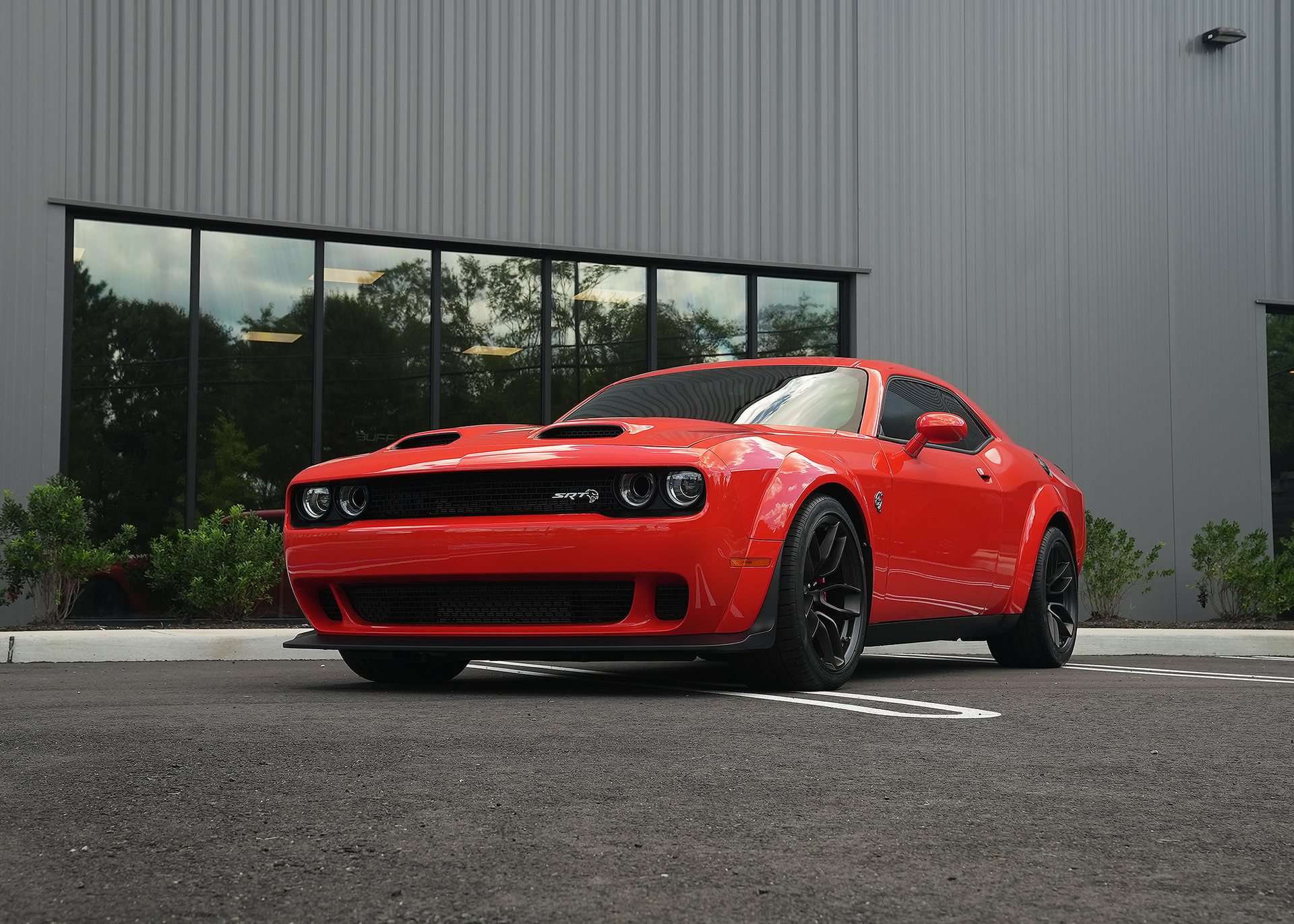
The owner said it on the phone before he said his name. "I do not want to see a single edge." That is the whole job, really. Anyone can cover a hood. The work is in the parts nobody is supposed to notice, and on a car this colour there is nowhere to hide.
Go Mango orange is not a forgiving paint. It shows every swirl in direct sun, and a rock chip on it reads white from across a parking lot. The owner had bought the car three weeks earlier and had driven it exactly twice, both times to us. He wanted the entire body wrapped in film before it saw a highway.
A full body is the longest job we do. This one was booked for five days. Here is how those five days went.
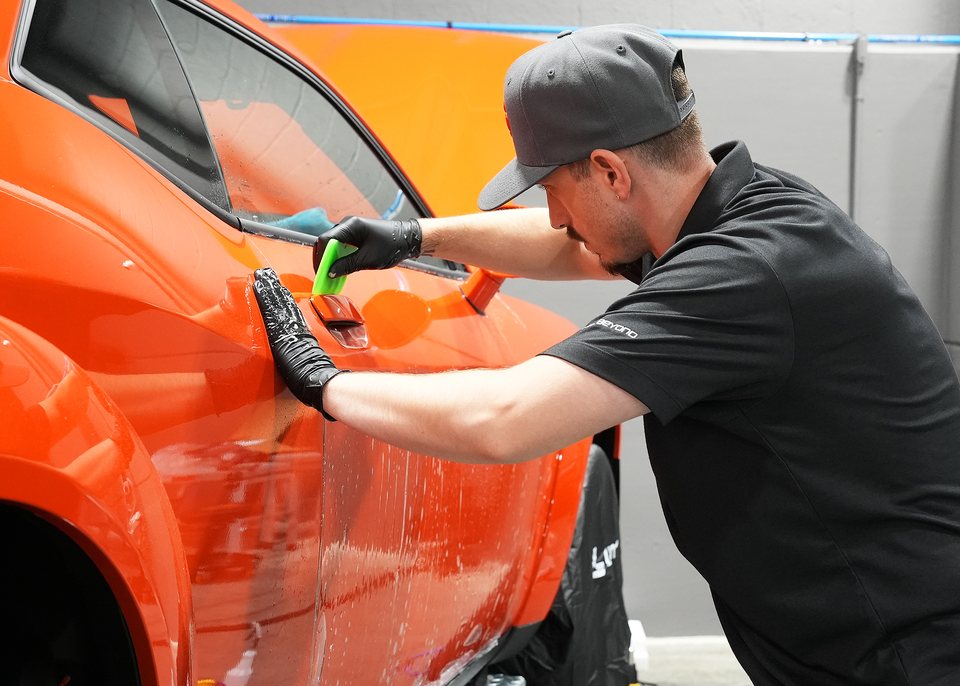
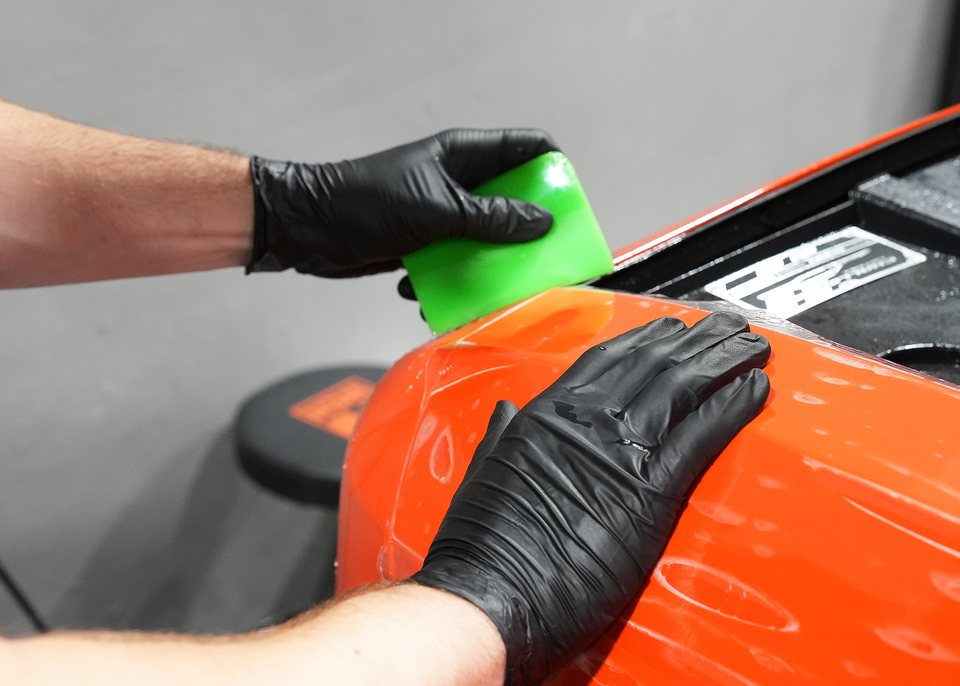
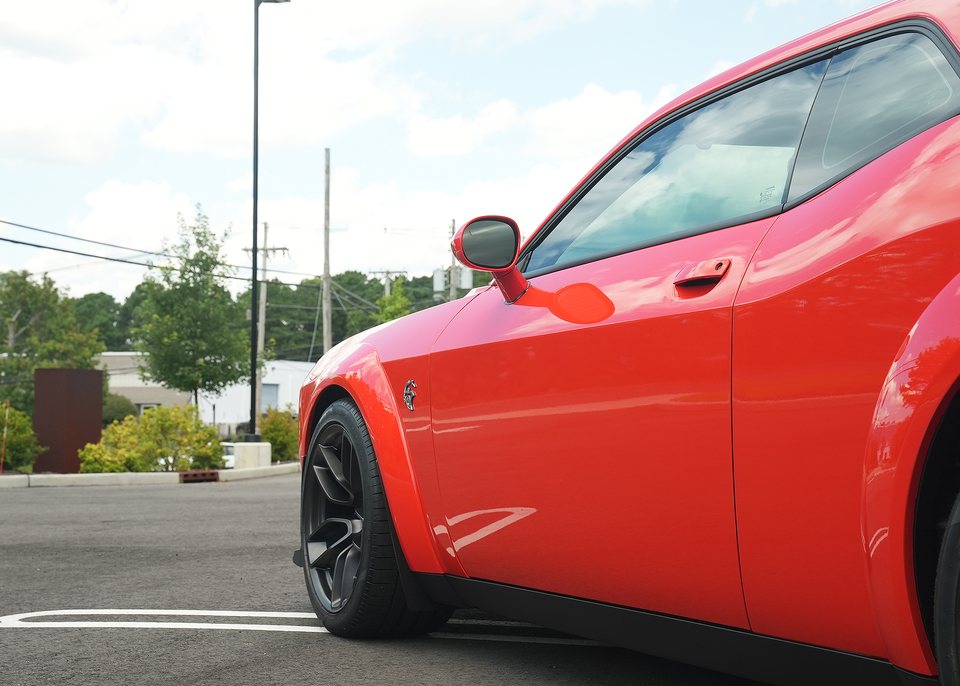
Nothing goes on until everything comes off.
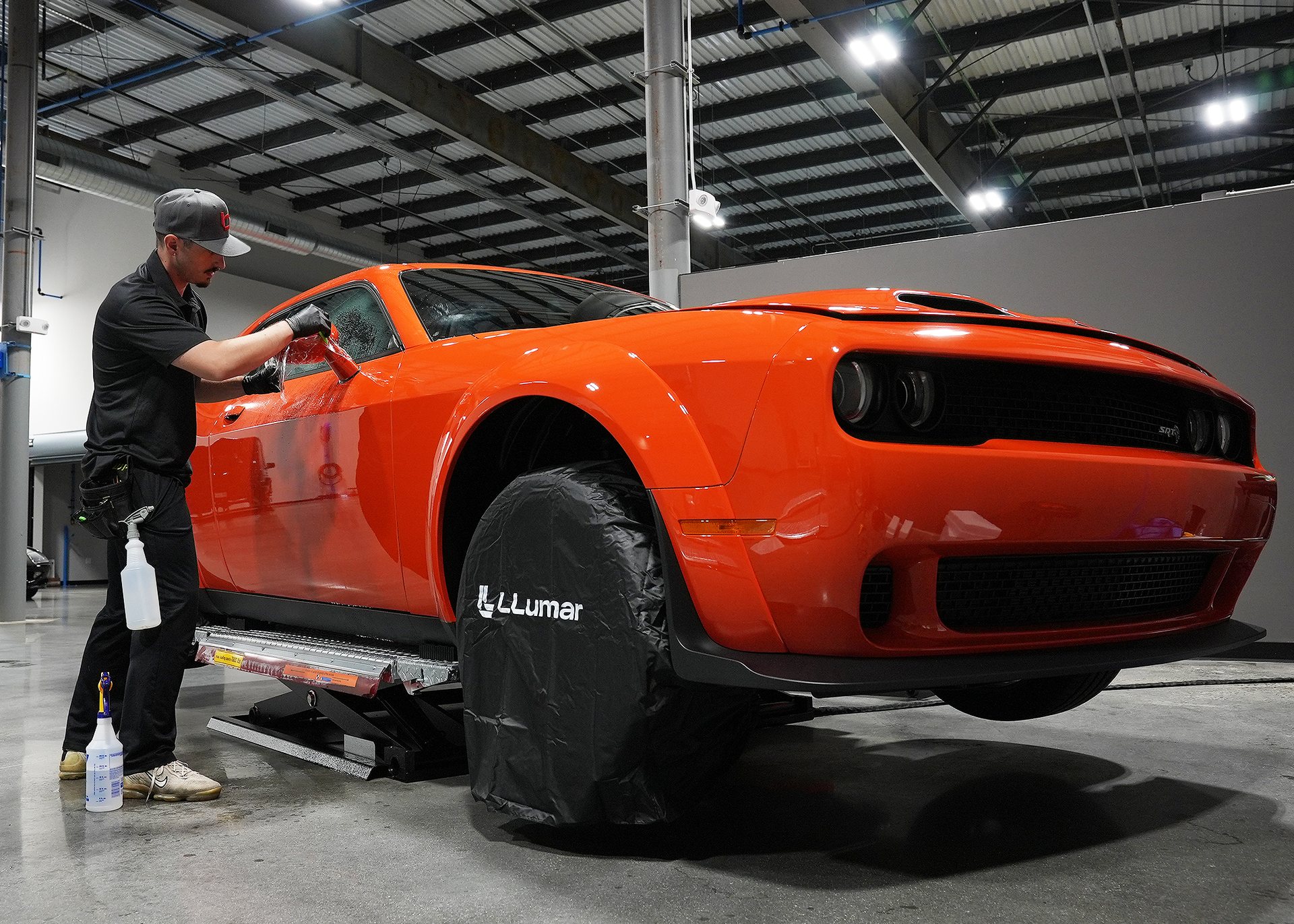
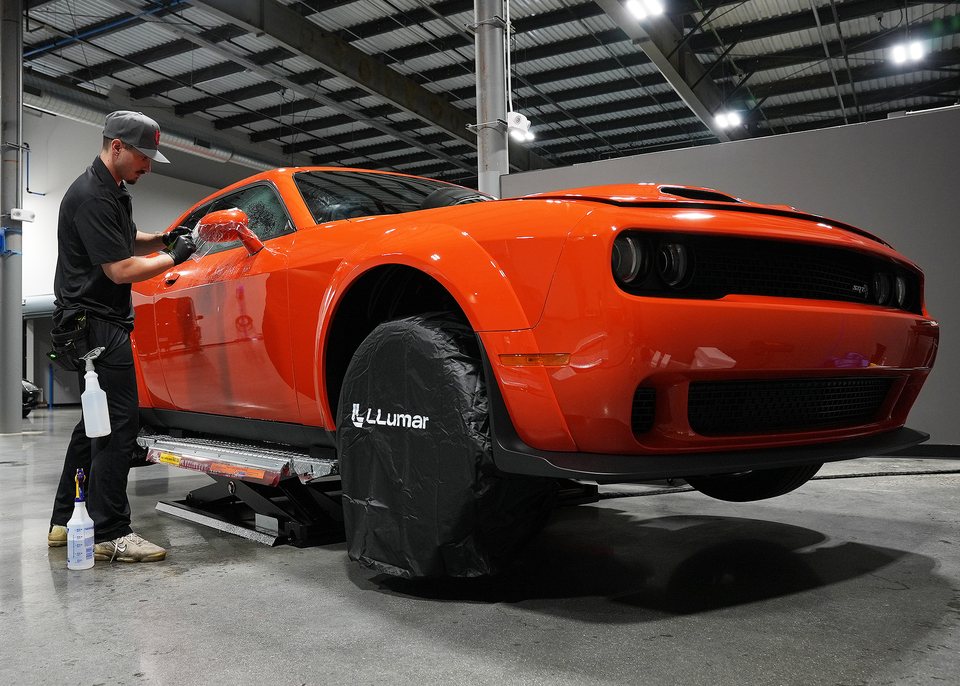
The car went straight onto the lift and got the same treatment every car gets before film: a full wash, a clay bar over every panel, and an iron decontamination to pull out anything embedded in the clear coat. On a three-week-old car that sounds excessive. It is not. Film locks in whatever is under it for years, so the surface has to be perfect before a single sheet is cut.
The rest of Monday went to inspection under the studio lights. Two small marks from the dealer's prep wash were corrected on the spot. The owner never knew they were there.
The kit is drawn for this car, not a car like it.
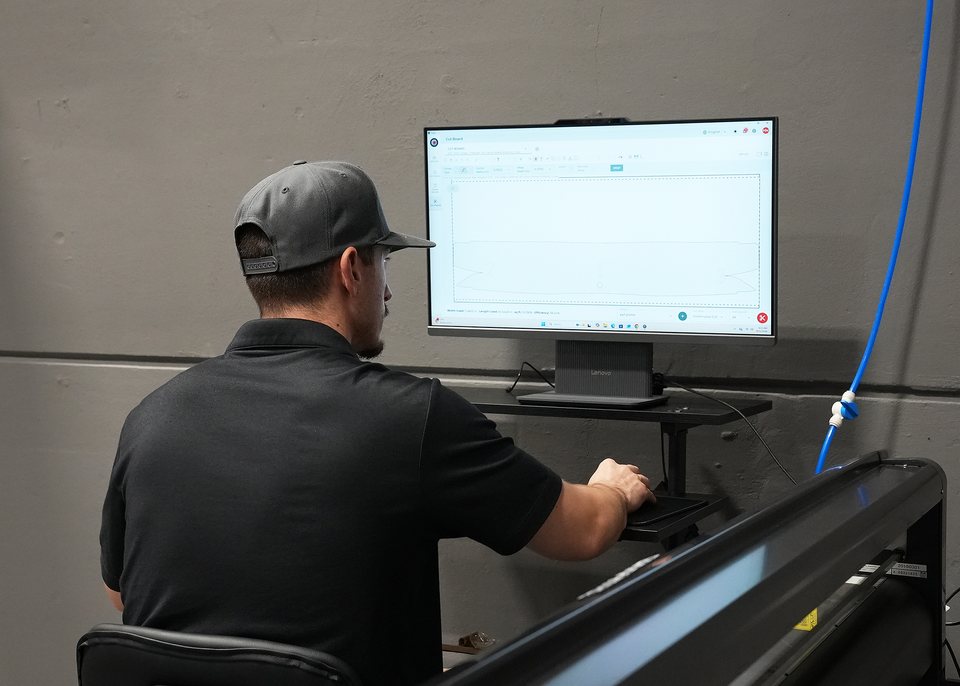
We do not buy pre-cut film. Every panel is plotted from a pattern library and adjusted to the car in front of us, because a Hellcat with a widebody kit and a Hellcat without one do not share a fender. Matt spent the morning at the plotter checking each pattern against the panel before it was cut, and marking where the edges would be wrapped rather than trimmed.
That decision is the one the owner cared about. A trimmed edge leaves a visible line a few millimetres in from the panel gap. A wrapped edge tucks around it and disappears. Wrapping takes longer, and it is the reason this was a five-day job and not a three-day one.
The big panels go on first.
Hood, roof, decklid, then the front fenders. Each sheet is floated onto the panel with slip solution, positioned, and then squeegeed from the centre out so the solution has somewhere to go. On a panel this size you get one chance to set the alignment before the film starts to tack, and the LLumar film we use is forgiving enough to lift and reset once if it has to be.
By the end of the day the car looked done from ten feet away. It was not.
Thursday is edges. All of it.
This is the day the owner was paying for. Every edge that could be wrapped was wrapped: the leading edge of the hood, the fender lips, the door edges, around the mirror caps, the lower rockers. Each one gets heated, stretched over the lip, and pressed down on the back side of the panel so the film ends somewhere you cannot see it.
It is slow work and it is done by hand. There is no tool for it. Two installers, one on each side of the car, working toward the back.
The walkaround.
Friday morning the car came off the lift, got a final wipe down, and went out into daylight for the first time since Monday. The owner walked every panel with us. He ran a fingernail along the hood edge, the fender lips, the doors. He did not find one.
He drove it home on the highway.
What you are actually paying for.
People ask why a full body costs what it does when the film itself is a fraction of the price. The answer is the calendar above. Five days of bay time, two installers for most of it, and a kit plotted for one specific car. The film is the material. The job is the hours.
Below is what went on this Hellcat, panel by panel. Tap any of them off to see what a smaller package would have covered, and what it would have left exposed.